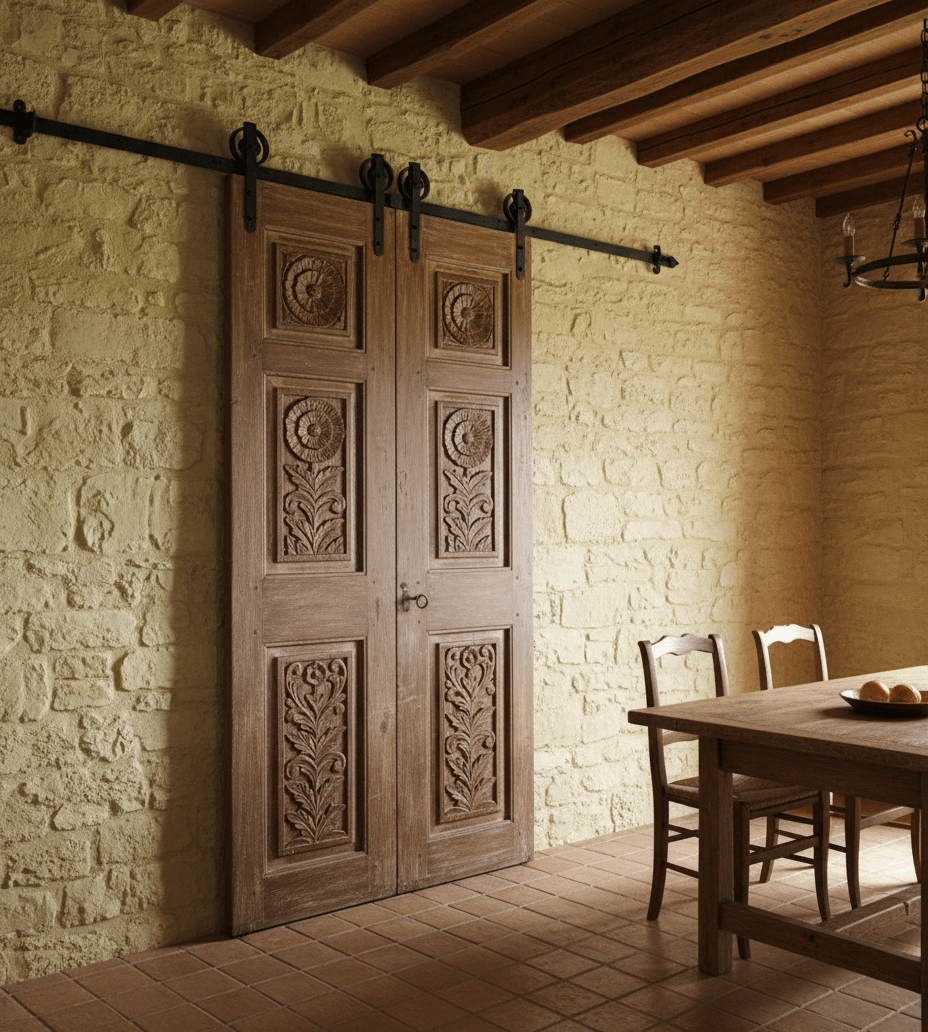
An 1880s farmhouse, once weathered by time and use, has been given a thoughtful second chance through the careful integration of reclaimed architectural elements and antique doors sourced from India. Rather than erasing the home’s history, the renovation builds upon it, layering global craftsmanship and aged materials to create a space that feels both grounded and renewed. Shop At Etsy DoorsByMJ
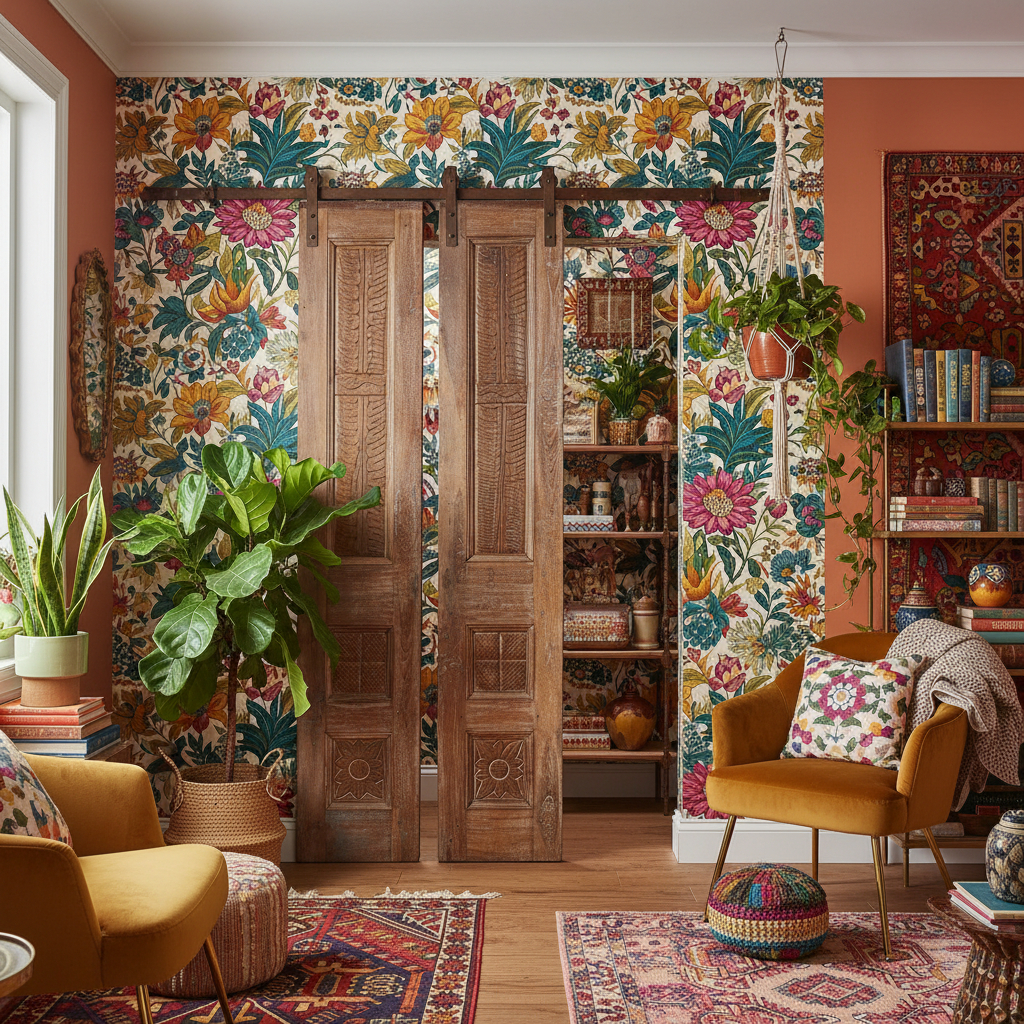
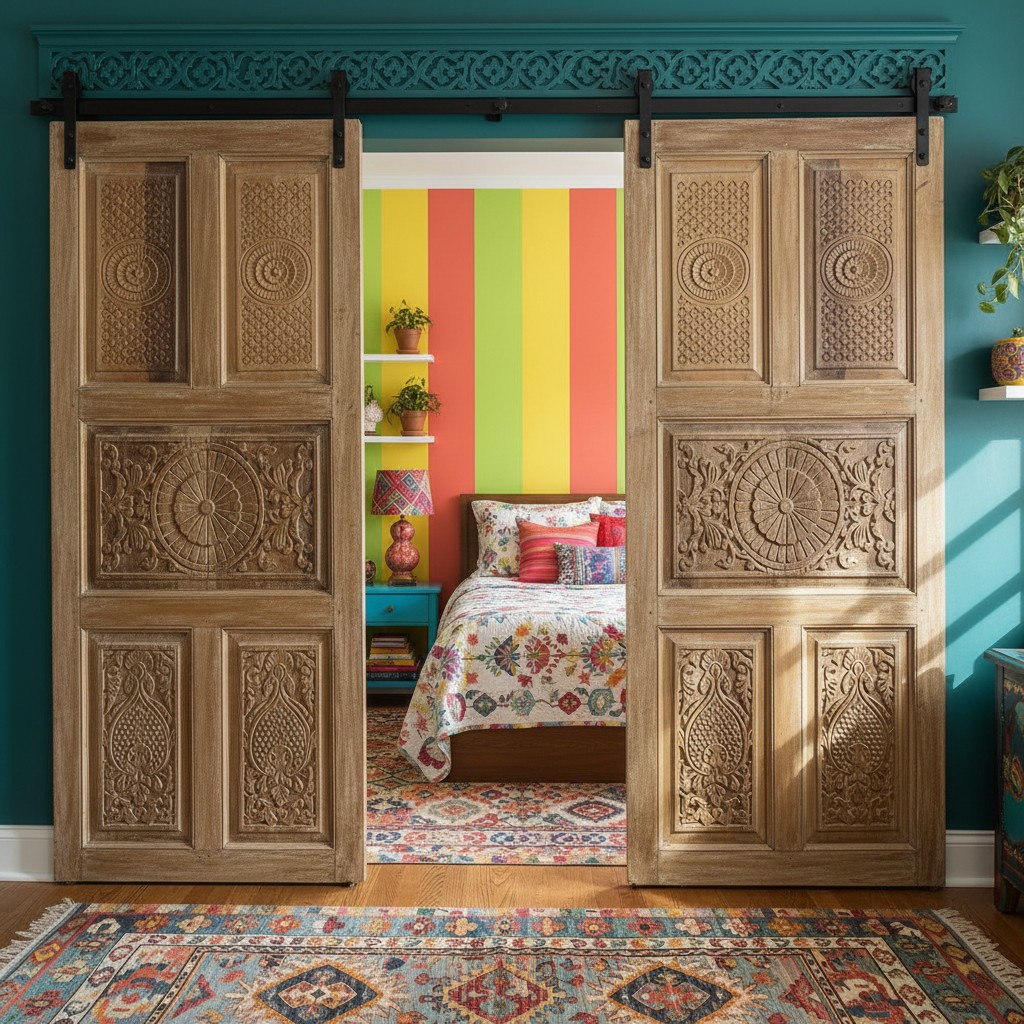

Reclaimed arches play a central role in the transformation, softening transitions between rooms while introducing a sense of rhythm and permanence. Their curved forms contrast beautifully with the farmhouse’s original linear bones, adding architectural interest without overwhelming the structure. Each arch bears subtle irregularities, evidence of prior lives that align naturally with the home’s 19th-century origins.
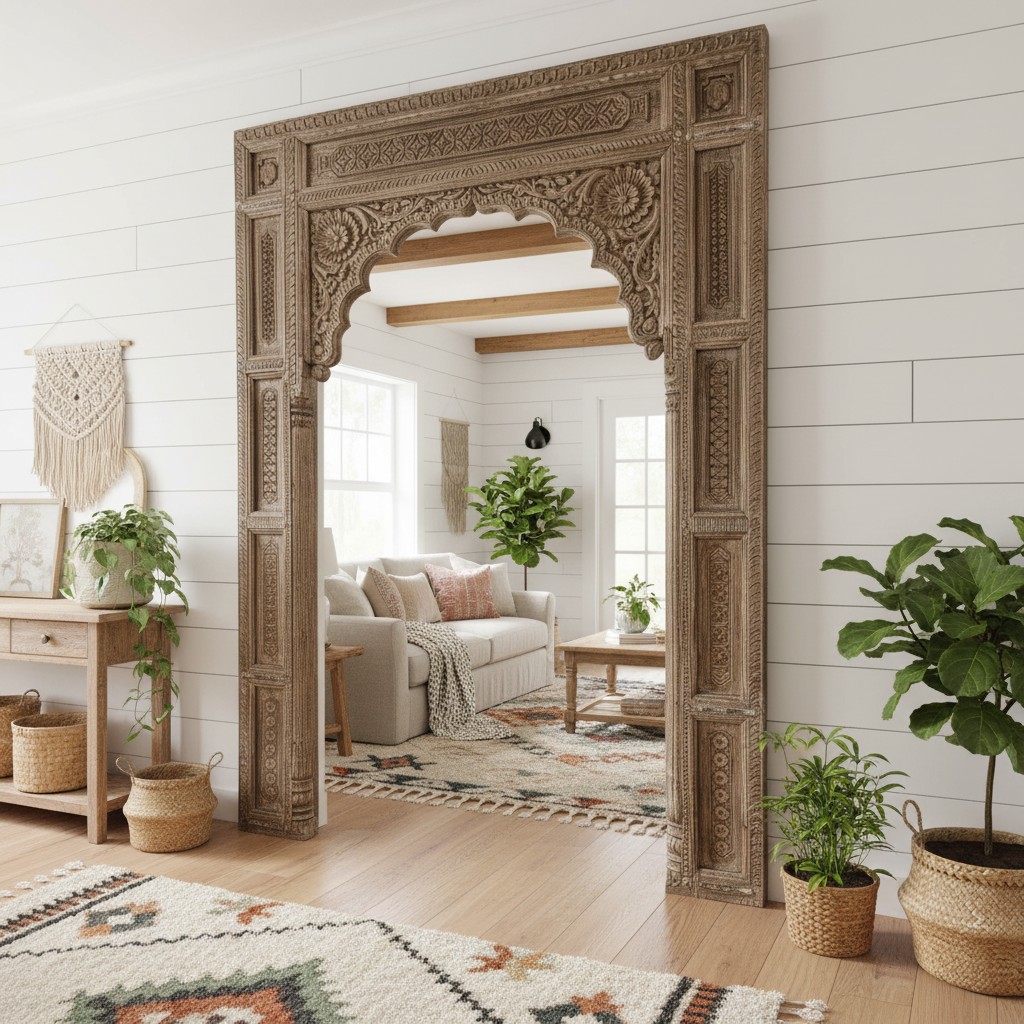
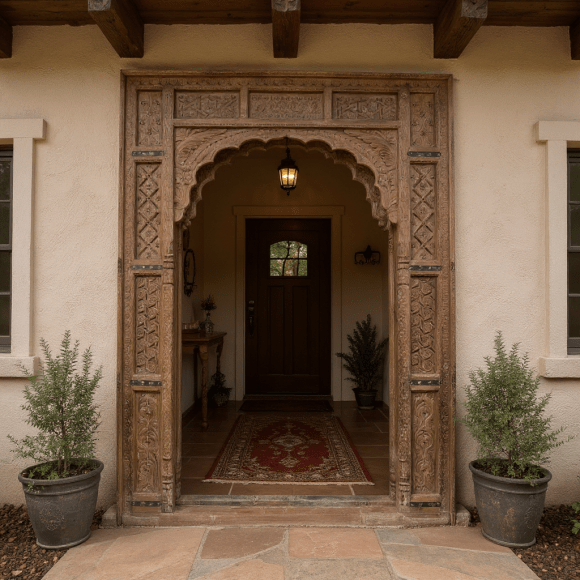
Antique doors from India bring a new narrative into the space. Richly carved and worn smooth by decades of use, these doors function as functional art. Some serve as interior French doors, allowing light to filter through while framing views, while others stand alone as dramatic thresholds. Their intricate floral and geometric motifs add depth and texture, offering a counterpoint to the farmhouse’s simpler finishes.
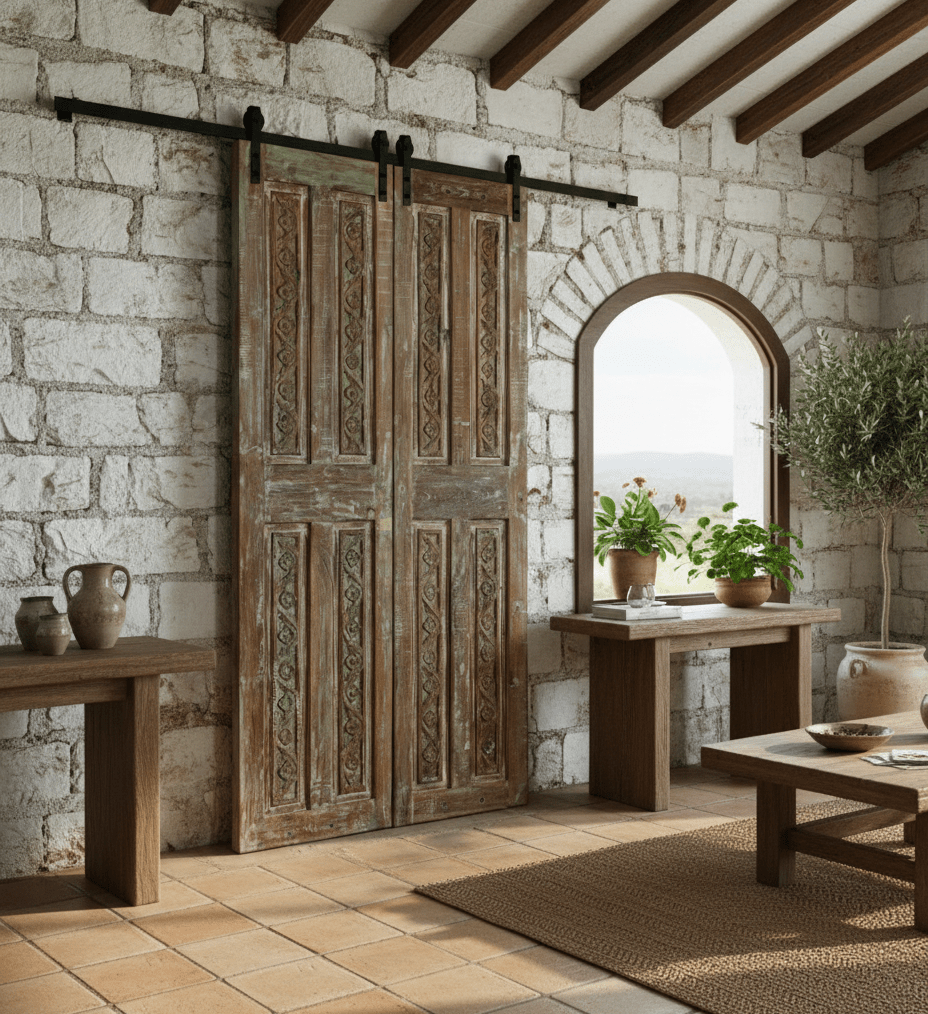
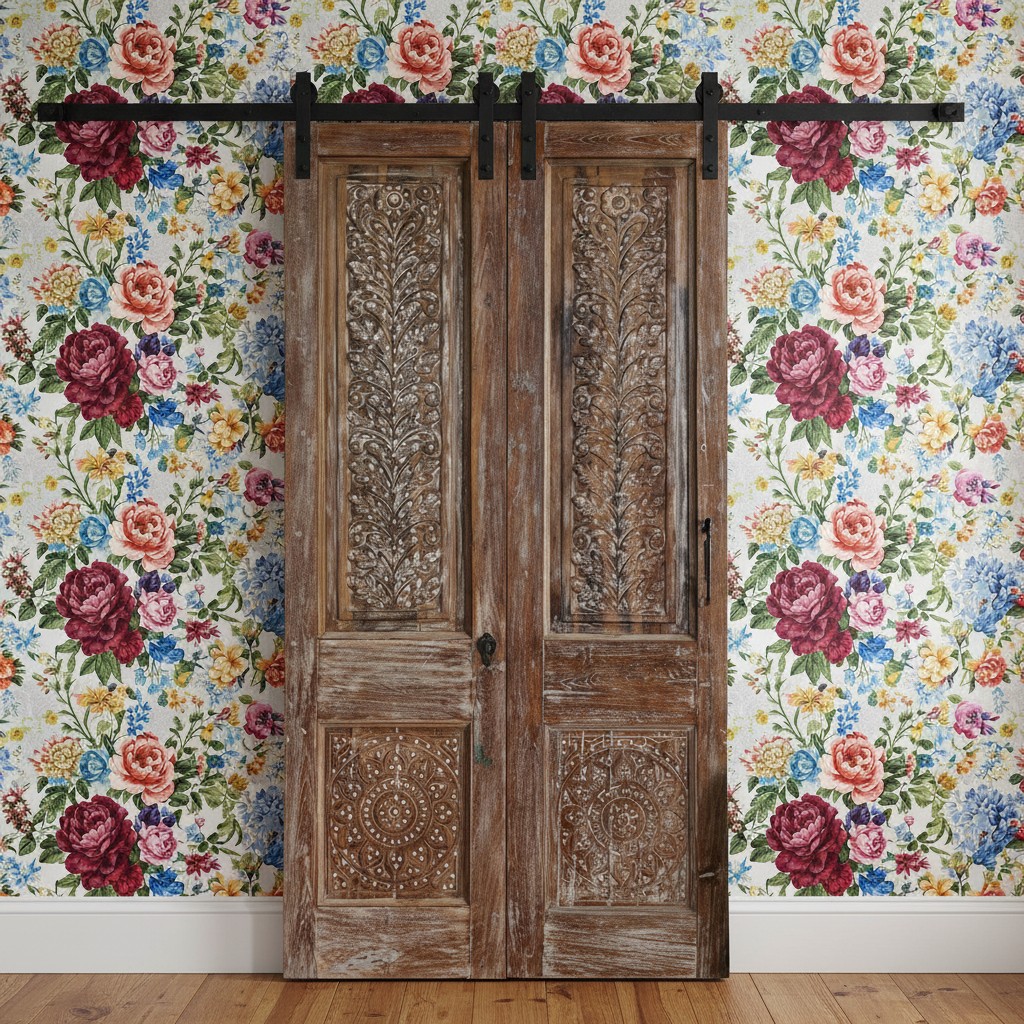

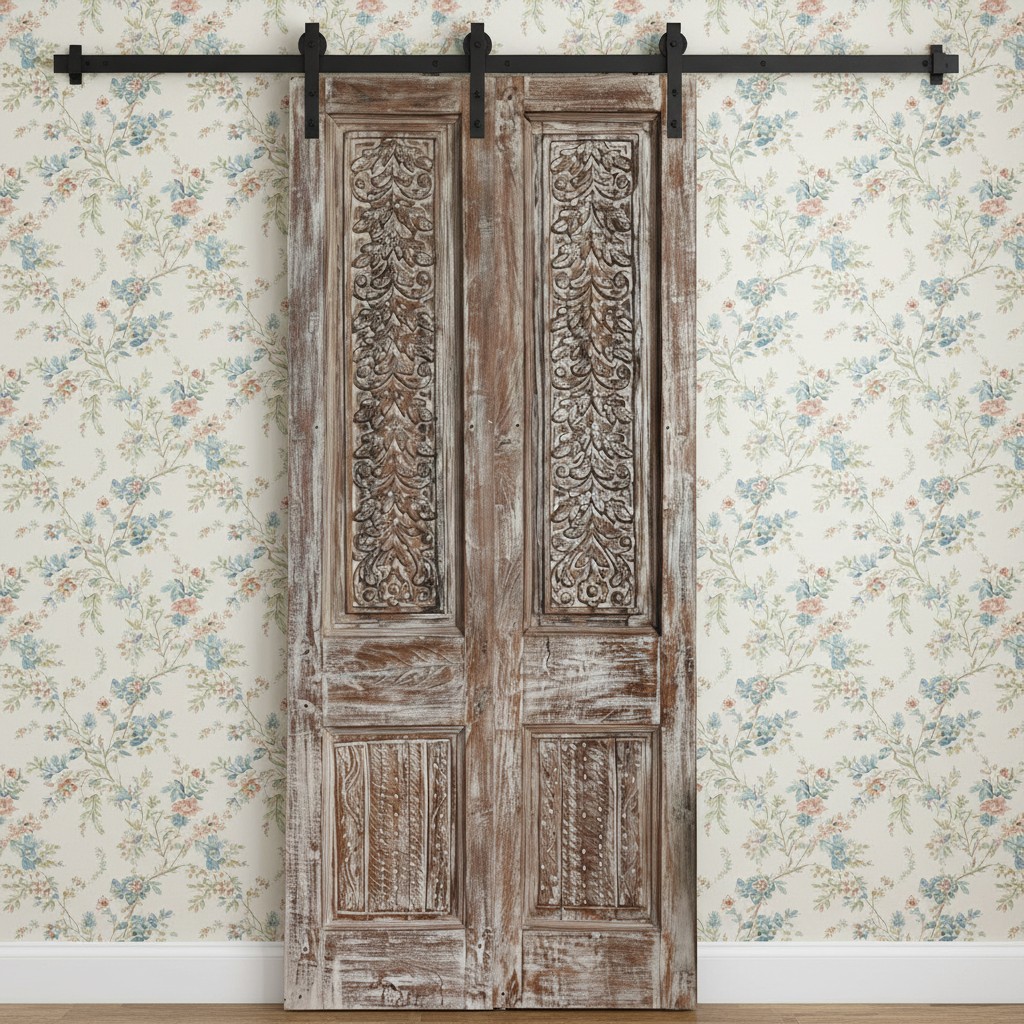
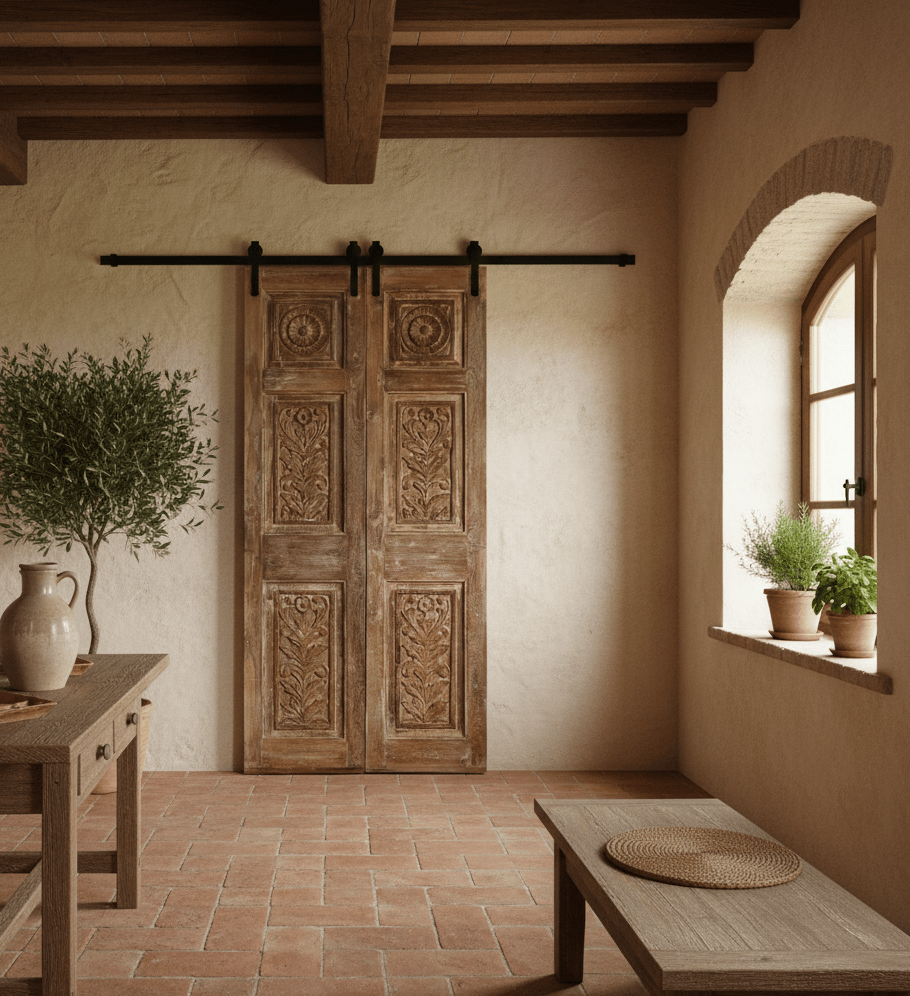
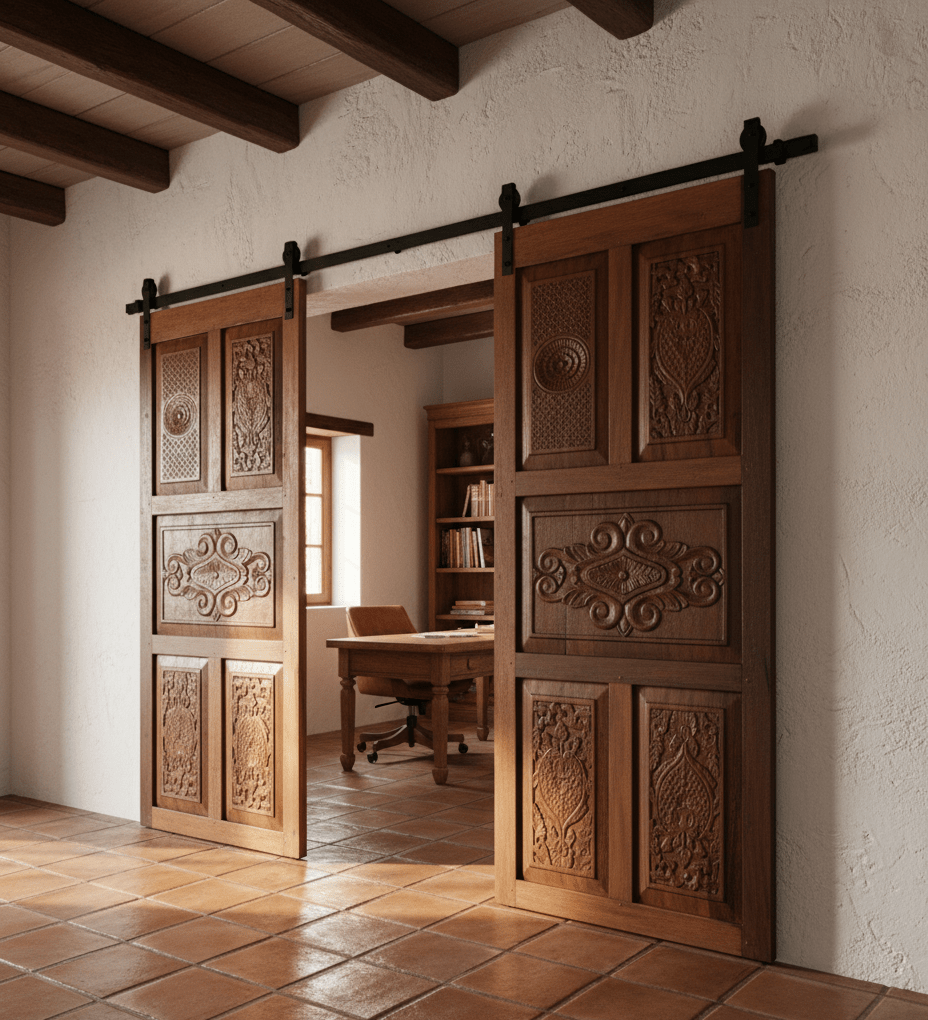
Carved barn doors complete the facelift, blending utility with ornament. Mounted on exposed hardware, they retain the agricultural spirit of the home while elevating it through craftsmanship. The patina of reclaimed wood, softened edges, and hand-carved details ensure that nothing feels new or overly polished.
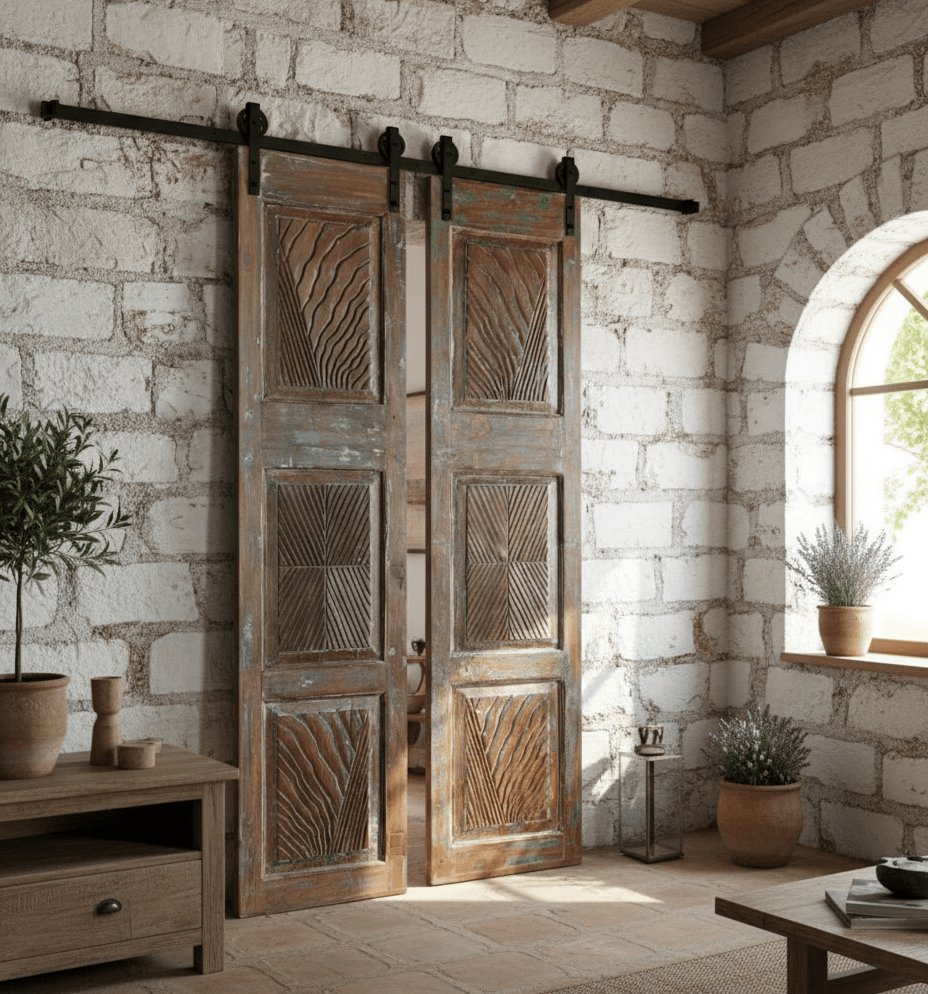
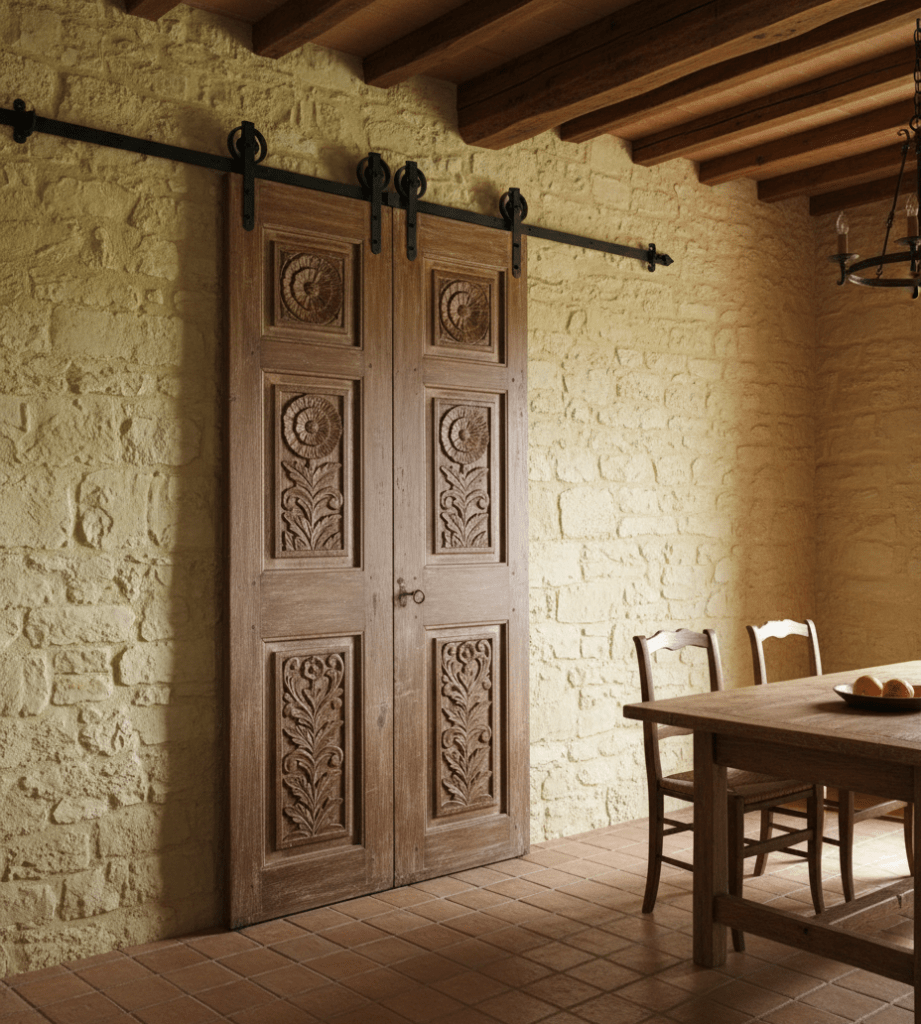

Together, reclaimed arches, antique Indian doors, and carved barn doors create a renovation rooted in respect—for materials, for history, and for storytelling. The result is a farmhouse that feels quietly layered and authentically lived-in, proving that preservation and reinvention are not opposing ideas but complementary ones.

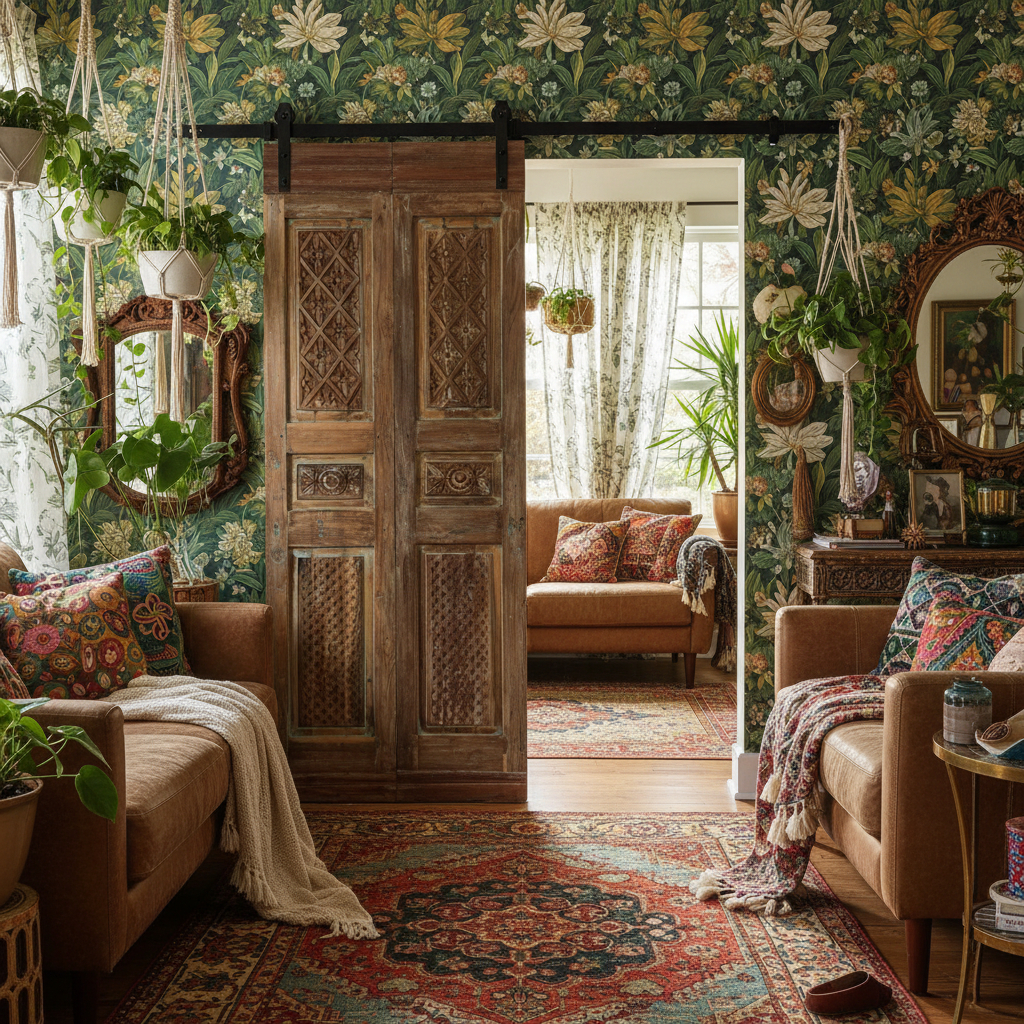


 Royal Bohemian Luxe